|
|
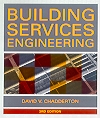
| Building Services Engineering 3rd edition |
|
|
| Engineering services within buildings can account for up to forty per cent of the original cost. The energy-using systems that service the building are a significant expense for the building owner in terms of the installed cost, the energy consumed during fifty years, or more, and in the maintenance, repair and upgrading of the systems and plant. This third edition of this well established textbook has been expanded to include new material on the acoustic design of air duct systems and updated numerical examples and questions. There are sufficient worked examples and student exercises to aid understanding and to provide assignment tasks and examination questions. The subjects of heating, air conditioning, water and gas distribution, electricity and drainage are all covered at introductory level and beyond. |
| | Review of this title : | The preface to the 3rd edition explains that the book is targeted at students of building services engineering including those studying to higher technician, graduate and post graduate levels. It is arranged as structured learning material with each chapter beginning with a clear list of 'learning objectives' and finishing with typical exam type questions. Along side the learning objectives at the start of a chapter is a helpful index to 'key terms and concepts' specific to the chapter. This is in addition to a conventional index at the back of the book. Answers to the exam questions are provided but only where the answer is calculated rather than narrative.
While the title implies that the contents is specifically concerned with building services there are chapters devoted to 'condensation in buildings', 'room acoustics' and 'energy economics' such that the book strays into building science. There is however no material on lifts, escalators nor security systems, so not fully comprehensive in terms of building services either. While not explicit, the scope of the text is limited to low temperature hot water systems with no specific references to medium temperature, high temperature and steam systems. But then the book only claims to be a broad introduction to the subject.
Students aside, the book would be of use to the more general building professional wishing to enhance their level of understanding of building services and environmental engineering. It is easy to dip into the book and find the method of calculation for rainwater gutter sizing or dew point identification within composite constructions or electrical cable sizing and much more. An ability with complex mathematical formulae would be essential.
The book does look a little tired with rather dated black and white photographs and some out of date references, however it does comprise 370 pages crammed with facts and figures that are in themselves largely timeless and helpfully brought together in one document and in either hardback or paperback. At £24.99 for the paperback edition it does represent very good value.
| | Reviewed By : Paul Wornell FCIOB |
|
 |
| Below is a selection of our bestselling similar items |
|
 |
 |
|
 |
|
|
| Your basket is currently empty |
|
 |
| Enter your email address to join
our mailing list |
|
 |
 |
|  |
|

|
|